Tracking Your Couch From Cairo to Cleveland: Port Said's Logistics Tech Is Changing How Americans Shop
You ordered a sectional sofa in February. The website said six to eight weeks. Twelve weeks later, you're eating dinner on a folding chair and refreshing a tracking page that still says "In Transit — Origin Port." Sound familiar?
What happened between that warehouse overseas and your front door is a story that runs straight through Port Said — and increasingly, the people working to fix that story are right here, too.
The Visibility Problem Nobody Talks About
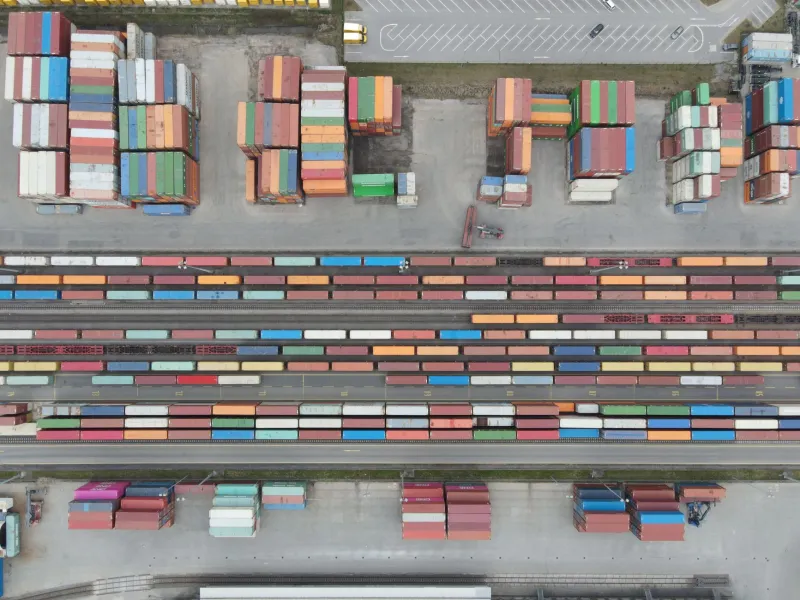
Here's the thing most consumers don't realize: for decades, international shipping has operated with remarkably little real-time transparency. A container leaves a factory in Vietnam, gets loaded onto a vessel, passes through the Suez Canal, crosses the Atlantic, and arrives at a U.S. port — and for huge stretches of that journey, nobody outside of a handful of logistics insiders has a reliable, live picture of where it actually is.
Shippers get updates at major checkpoints. Retailers get broad ETAs. Consumers get a tracking number that barely moves. The whole system runs on a patchwork of legacy software, manual data entry, and phone calls between port agents who still fax things to each other.
That's the gap Port Said's emerging logistics tech companies are trying to close.
Why Port Said? Why Now?
Geography is a big part of the answer. Every day, dozens of container ships transit the Suez Canal — which means every day, an enormous volume of global cargo flows right past this city. Port Said sits at the northern entrance to the canal, making it one of the most strategically positioned cities on the planet when it comes to international freight.
Local entrepreneurs and engineers have been watching that traffic for years. What they've started building, especially in the last half-decade, are platforms that plug into the canal's data infrastructure and layer on real-time tracking capabilities that didn't exist before.
Think of it like this: the Suez Canal Authority already collects a ton of operational data about every ship that transits — vessel ID, cargo manifests, transit timing, positioning. What Port Said's tech developers are doing is essentially building a translation layer between that raw maritime data and the kind of clean, accessible dashboards that American logistics managers and retailers can actually use.
What "Real-Time" Actually Means Here
When logistics professionals talk about real-time tracking, they don't just mean knowing a ship's GPS coordinates. The more valuable data points are things like: Is the cargo still intact? Has the container been opened? Is the ship running ahead of or behind schedule? If there's a delay at the canal, how does that ripple downstream to port arrival times in New Jersey or Long Beach?
Some of the platforms being developed in Port Said are starting to answer those questions with a level of specificity that's genuinely new. IoT sensors attached to containers can transmit temperature, humidity, and shock data — critical for things like pharmaceuticals, electronics, and food products. Predictive analytics tools are being trained on historical canal transit data to give shippers better delay forecasts before a problem becomes a crisis.
For American businesses that source products from Asia or Europe, this kind of visibility isn't just a nice-to-have. After the supply chain chaos of 2021 and 2022 — when a single stuck ship in the Suez made headlines and emptied store shelves across the U.S. — executives started treating supply chain transparency as a core business risk, not a logistics department headache.
American Businesses Are Paying Attention
A handful of U.S.-based logistics companies and freight forwarders have started piloting integrations with Port Said-developed platforms, particularly for Asia-to-U.S. routes that transit the canal. The appeal is straightforward: better data at the Suez chokepoint means better planning on both ends.
Retailers, in particular, stand to benefit. If a platform can tell a furniture company three weeks in advance that their shipment is likely to be delayed by five days due to canal congestion, that company can update their website, adjust their warehouse scheduling, and send customers a heads-up — instead of apologizing after the fact.
That kind of proactive communication doesn't just reduce customer service headaches. It builds the kind of trust that keeps shoppers coming back.
The Human Side of the Innovation
It's worth pausing on just how unlikely this innovation hub seems from the outside. Port Said isn't Singapore or Rotterdam. It doesn't have the glossy startup campuses or the billion-dollar venture funds. What it has is proximity — physical and institutional — to one of the most important maritime chokepoints on earth, plus a generation of engineers and entrepreneurs who grew up watching the world's shipping lanes run through their backyard.
Many of the people building these tools are locals who studied abroad, worked in European or Gulf logistics firms, and came back with both technical skills and a clear-eyed sense of what the industry actually needs. They're not building solutions in a vacuum — they're building them with direct access to the port ecosystem, the canal authority's data, and a network of shipping agents who've been doing this work for generations.
That ground-level knowledge is harder to replicate than any piece of software.
What It Means for the Rest of Us
For the average American consumer, the direct impact of Port Said's logistics tech isn't going to show up as a press release. It'll show up as a tracking page that actually updates. As an email that says your order is delayed before you have to ask. As a product that arrives in the condition it was supposed to, because someone along the way was actually watching.
The supply chain is long and complicated, and no single city — even one as strategically positioned as Port Said — is going to fix it alone. But the work happening here is a meaningful piece of a larger puzzle that affects everything from the price of your TV to the availability of your kid's bicycle at Christmas.
Next time you're refreshing that tracking page, there's a decent chance the data you're seeing — or wishing you had — has something to do with what's being built right here, at the top of the canal, in a city most Americans couldn't find on a map.
That's kind of the point. The most important infrastructure is usually invisible until it isn't working. Port Said is working on making sure it keeps working.