Diving Into History: The Archaeologists Racing to Save What Lies Beneath the Suez
Every day, somewhere between 40 and 50 ships pass through the northern entrance of the Suez Canal at Port Said. Tankers the size of city blocks. Container vessels stacked so high they block the horizon. Bulk carriers hauling everything from American wheat to Australian iron ore. The world watches this parade of commerce from above the waterline.
But almost nobody talks about what's happening below it.
Beneath those massive hulls, resting in the silt and sediment of one of the most heavily trafficked waterways on the planet, lies a graveyard of history. Anchors from vessels that sailed before the United States existed as a country. Cannons. Cargo manifests turned to rust. The skeletal remains of ships that didn't make it. And a small, underfunded, deeply passionate team of researchers doing everything they can to document it before it's gone.
What's Actually Down There
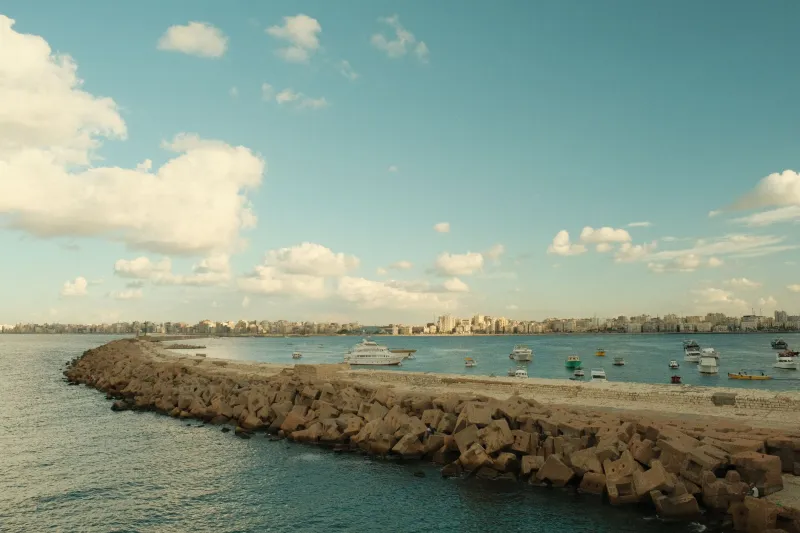
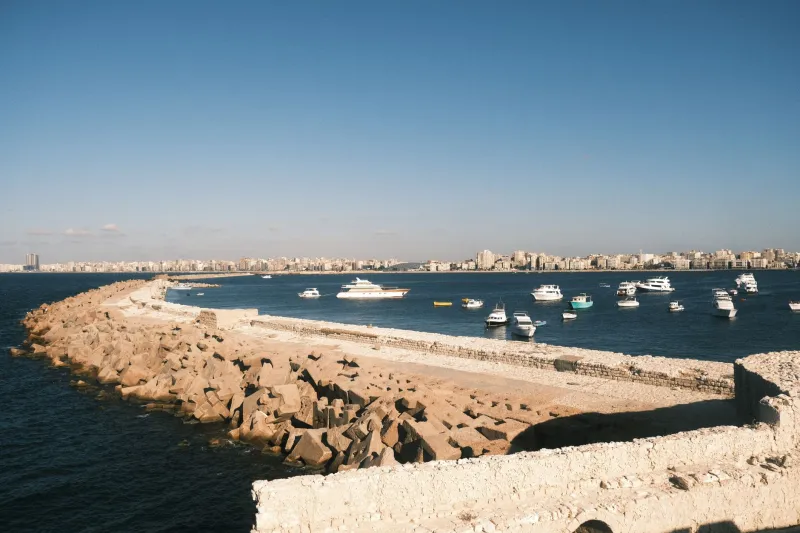
Port Said sits at the intersection of the Mediterranean Sea and the northern mouth of the Suez Canal — a geographic position that made it one of the most strategically important ports in the world long before the canal was even dug. Phoenician traders moved through this stretch of coastline. Arab merchants followed. Ottoman naval vessels patrolled these waters for centuries.
Then came the canal itself, opened in 1869, and with it a new chapter of maritime traffic that never really stopped. Wars were fought here. The 1956 Suez Crisis left physical scars on the waterway. World War I and World War II each contributed their own layer of wreckage to the canal floor.
According to researchers affiliated with Egypt's Supreme Council of Antiquities, the underwater zone around Port Said contains dozens of confirmed wreck sites and an unknown number of additional artifact fields. Some are well-documented. Many are not. A few were only recently discovered when dredging operations or sonar surveys turned up anomalies that nobody expected to find.
The Researchers Working in the Margins
Marine archaeology is never a glamorous profession. But doing it in the Suez Canal corridor adds a layer of logistical complexity that most underwater researchers never have to deal with.
For starters, you can't exactly ask the MSC Gülsün — one of the largest container ships ever built — to hold off while you finish your dive survey. The canal operates on a schedule, and that schedule does not pause for history. Dive windows are narrow, water visibility is often poor due to sediment churned up by constant ship traffic, and the bureaucratic process of getting permits to work in an active commercial shipping lane is, by all accounts, exhausting.
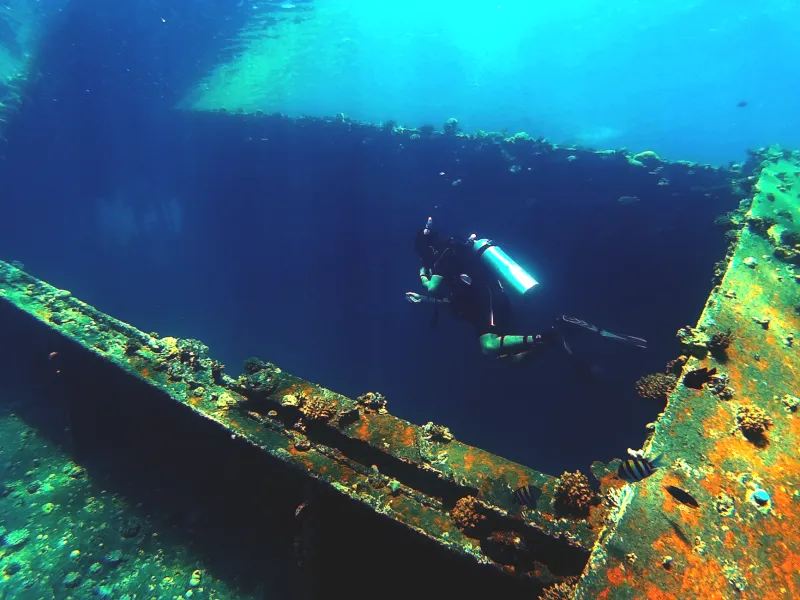
Despite all of that, a small network of Egyptian marine archaeologists, working in coordination with international partners and occasionally supported by universities in Europe and the United States, has managed to build a growing catalog of what lies beneath. Their tools include side-scan sonar, underwater drones, photogrammetry rigs, and old-fashioned scuba gear. Their goal is documentation first, preservation second — because in a waterway this busy, physical excavation is rarely possible.
"You're not digging anything up," one researcher explained during a conference presentation that circulated in maritime history circles a few years back. "You're trying to create a record detailed enough that future generations will know what was there, even if the shipping traffic eventually destroys it."
Why It Matters to Americans
This might feel like a niche concern — the kind of thing that matters to history buffs and academics but doesn't really touch everyday life. But there's a reason Port Said's underwater heritage is worth paying attention to, even from thousands of miles away.
The Suez Canal is the reason your Amazon delivery doesn't take six extra weeks. It's the reason gasoline prices don't spike every time a ship needs to reroute around Africa. The waterway handles roughly 12 to 15 percent of global trade by volume. When the Ever Given got stuck in 2021, Americans felt it in their wallets within weeks.
Understanding the full history of this corridor — including what's been lost, what's been fought over, and what's been quietly forgotten beneath the waterline — gives context to why this stretch of water became so critical in the first place. The wrecks down there aren't just artifacts. They're evidence of every power struggle, every trade war, every moment of imperial ambition that shaped the modern global economy.
Port Said didn't become the gateway to global commerce by accident. It was built, contested, and rebuilt on top of centuries of maritime activity. The archaeology is the receipts.
Conservation Under Pressure
The tension between preservation and commerce is real, and the researchers navigating it don't pretend otherwise. Dredging — essential for keeping the canal deep enough to accommodate modern mega-ships — periodically disturbs artifact sites. Anchors get snagged and dragged. Sediment layers that protect organic materials from decay get disrupted by propeller wash.
There have been efforts to designate certain zones as protected archaeological areas, with mixed results. The canal authority, understandably, prioritizes operational efficiency. Environmental groups push for stronger protections. Archaeologists try to document as much as possible before conditions change.
It's an imperfect system, and everyone involved seems to know it. But the alternative — doing nothing — isn't really an option either.
Some international partnerships have helped. Joint projects with French and Italian maritime heritage organizations have brought additional sonar equipment and technical expertise into the region. A handful of American university programs have expressed interest in collaborative surveys. Funding, as always, remains the biggest obstacle.
What Visitors Can Actually See
If you're planning a trip to Port Said and you're curious about this underwater world, there are ways to engage with it without a dive certification.
The Port Said National Museum holds a collection of artifacts recovered from canal-area excavations over the decades, including ceramics, navigation instruments, and items recovered from known wreck sites. It's not a massive collection by international standards, but the context it provides for the city's maritime history is genuinely worth a few hours of your time.
Some local dive operators offer recreational dives in areas outside the active shipping lane, where visibility is better and the historical density is still significant. If you're a certified diver with an interest in wreck diving, it's worth asking around — the experiences available here don't show up in most travel guides.
And honestly, even standing at the edge of the canal and watching the ships pass tells you something. Every one of those vessels is adding to the story that's already buried beneath them. The history isn't just in the past. It's still accumulating.
The Long Game
Marine archaeology is, by nature, a patient discipline. You document what you can. You advocate for protections where possible. You build a record that might matter more to the next generation than it does to yours.
In Port Said, that work is happening quietly, without much fanfare, in one of the most complicated operational environments on earth. The researchers doing it aren't asking for recognition. They're asking for time — and maybe a little more space between the ships.
Given everything that rides on this waterway, that seems like a reasonable request.