Where Handshakes Happen Quietly: Port Said's Surprising Role in Global Diplomacy
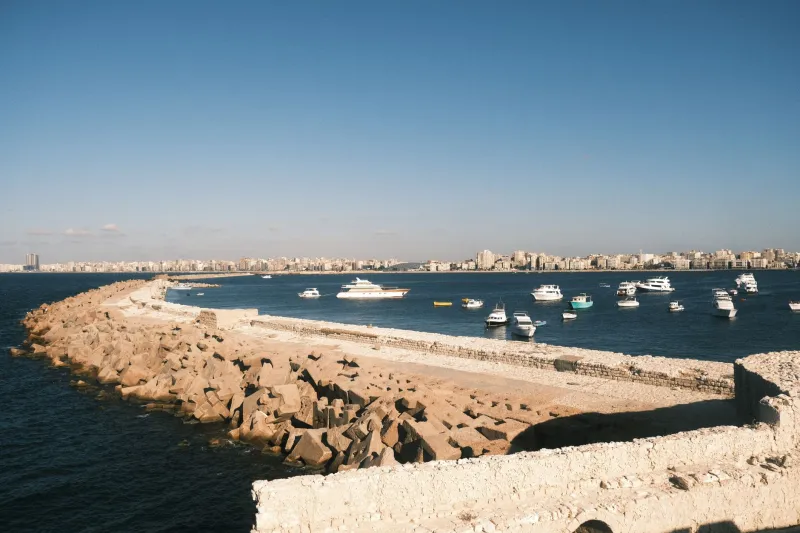
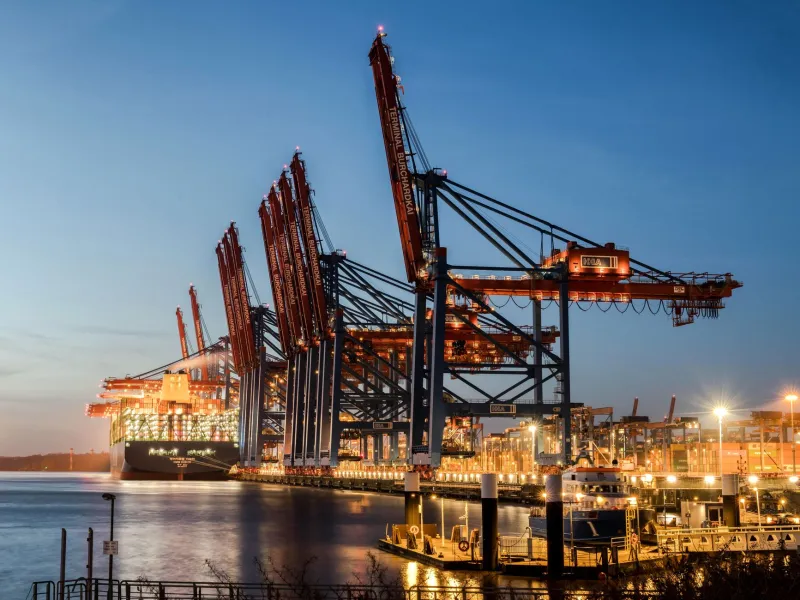
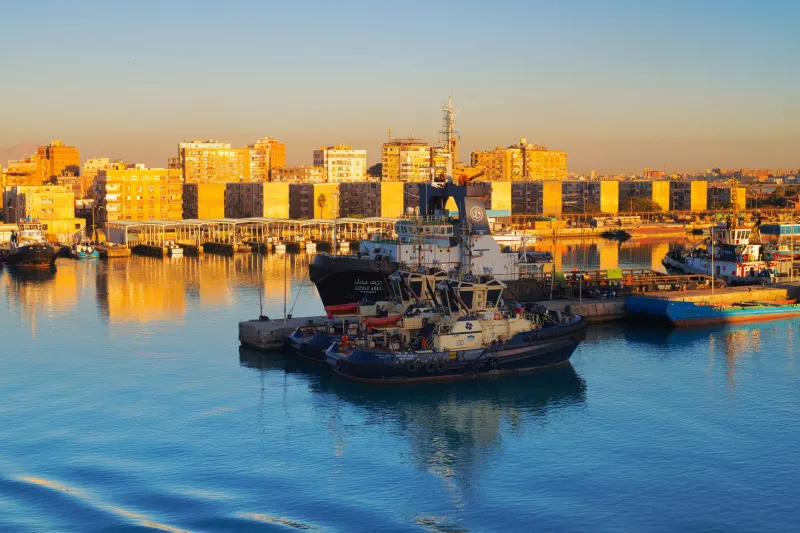
Most Americans picture Port Said as a dot on a shipping map — the northern entrance to the Suez Canal, a place where enormous container ships queue up before threading through one of the world's most consequential waterways. That picture isn't wrong. But it's incomplete.
Because for more than a century, Port Said has also been a place where people with very different agendas sit down at the same table. Quietly. Often without press releases.
"The city has always attracted people who needed to be somewhere that wasn't quite anyone's territory," says Dr. Mervat Khalil, a historian at the Suez Canal University who has spent two decades studying Port Said's political and cultural history. "It sits at the edge of three continents in a practical sense. It belongs to Egypt, yes, but it has never felt like a purely Egyptian city. That ambiguity has always been useful to diplomats."
A Port Built for the World
To understand why Port Said became a discreet meeting point for international players, you have to go back to its founding. The city was built almost from scratch in 1859 to serve the construction of the Suez Canal, and from day one it was cosmopolitan by design. French engineers, British financiers, Greek merchants, Italian laborers, and Levantine traders all poured in together. By the early twentieth century, Port Said had functioning communities from more than a dozen nationalities, several competing consulates, and a street-level culture that was genuinely multicultural in a way that most cities in the region simply weren't.
That heritage left a lasting imprint. Even today, walking the older neighborhoods near the waterfront, you'll spot French-style arcaded buildings next to Ottoman-influenced facades. The city's oldest hotels — some still operating — were built to receive international guests who expected a certain level of discretion along with their room service.
"Neutrality has a geography," Dr. Khalil explains. "Port Said developed that geography early, and it never really lost it."
The Cold War Conversations Nobody Talks About
Former Egyptian Foreign Ministry official Ahmed Selim, now retired and living in Port Said, chose his words carefully when we met him at a café near the old harbor. He spent much of his career as a mid-level protocol officer, which meant he was often the person arranging logistics for meetings that weren't supposed to appear on anyone's official calendar.
"I can tell you in general terms that Port Said was used," he said, smiling. "During periods when Cairo was too visible, when Alexandria was too social, Port Said offered something different. You could arrive by sea. You could leave by sea. Nobody was watching the passenger manifests the way they watched the airports."
He's describing a pattern that regional historians have documented more openly in recent years: during the 1960s and 1970s, when the Middle East was a chess board for superpower competition, Port Said's port infrastructure made it unusually easy for delegations to arrive and depart without the kind of media scrutiny that plagued more prominent cities. Ships don't generate the same paparazzi interest as international airports.
At least two significant back-channel conversations during the lead-up to the 1973 Arab-Israeli War are believed to have involved intermediaries passing through Port Said, according to documents cited in academic work published by the American University in Cairo. Neither Egypt nor the other parties involved have fully confirmed the details — which, in a way, proves the point.
The Hotels That Keep the Secrets
If you want to understand the mechanics of Port Said's diplomatic function, talk to the people who run its older hotels. Mahmoud Fawzi, the third-generation manager of a waterfront property his grandfather opened in the 1940s, has seen a lot come and go.
"We have always had guests who needed privacy more than they needed amenities," he said. "Not criminals — I want to be clear about that. Businesspeople. Government people. People who needed to have a conversation that was not yet ready for the newspapers."
His hotel, like several others in the older part of the city, has private dining rooms that can be reserved without appearing on the main reservation system. There are side entrances. There is, Fawzi noted with some pride, a culture among staff of not discussing which rooms are occupied or by whom.
"In New York or London, a famous person checks in and the whole staff is on their phone," he said. "Here, we were trained differently. Discretion is part of the service."
This isn't just local mythology. International business consultants who work across the region have noted Port Said's utility for sensitive commercial negotiations — particularly in the energy sector, where deals between competing national interests often require a location that doesn't carry the political symbolism of a capital city.
Energy, Infrastructure, and the New Diplomacy
In recent years, Port Said's role has shifted with the times. The classic Cold War back-channel model has given way to something more commercially oriented, though no less sensitive. As Egypt has expanded its role in regional natural gas markets — particularly following major offshore discoveries in the Mediterranean — Port Said has become a practical staging ground for energy negotiations involving European buyers, Gulf investors, and East African partners.
"The canal is still the main story," says Dr. Khalil. "But around the canal there is an enormous amount of commercial diplomacy happening. Contracts for port infrastructure. Agreements about transit fees. Partnerships on logistics technology. These are not glamorous conversations, but they shape how goods move and who profits from that movement."
For American companies with interests in the region — and there are many, from shipping firms to defense contractors to energy companies — Port Said has become a place where quiet introductions get made and preliminary terms get sketched out before anything formal moves to Cairo or Washington.
Why This Matters for Travelers
None of this makes Port Said feel like a spy thriller when you're actually walking its streets. The city is friendly, relatively unhurried by big-city standards, and genuinely welcoming to foreign visitors in a way that can surprise Americans who expect a more guarded reception.
But knowing this history adds a layer to the experience. When you're sitting in one of the old waterfront cafés watching a massive tanker ease its way toward the canal entrance, you're not just watching global commerce in motion. You're sitting in a city that has spent more than 150 years serving as a place where the world's complicated business gets done — sometimes loudly, in the form of cargo manifests and shipping schedules, and sometimes very quietly indeed.
Dr. Khalil puts it simply: "Port Said has always understood that the most important conversations are the ones that don't make the news until years later, if at all. The city is comfortable with that. It has always been comfortable with that."
That comfort with complexity, with ambiguity, with the space between official positions — it might be the most underrated thing about this city. And for a traveler willing to look past the cargo cranes and shipping lanes, it makes Port Said one of the more genuinely fascinating places on the map.