Trillions Passing Through, and Nobody's Talking About It: The Strange Invisibility of Port Said
Picture a city that sits at the entrance to one of the most economically vital waterways on earth. Every year, somewhere between 12 and 15 percent of all global trade passes right by its doorstep. The ships carrying your sneakers, your phone components, your olive oil, and your flat-screen TV all thread through the narrow corridor this city guards. By any reasonable logic, that city should be famous. It should be wealthy in a way that's obvious — gleaming skyline, international airport packed with business travelers, a name that rolls off the tongue of every economics student in the world.
Port Said is none of those things. And that gap between what it should be and what it feels like when you're walking its streets is one of the most interesting puzzles in the entire Mediterranean region.
The Numbers Don't Lie, But They Don't Tell the Whole Story Either
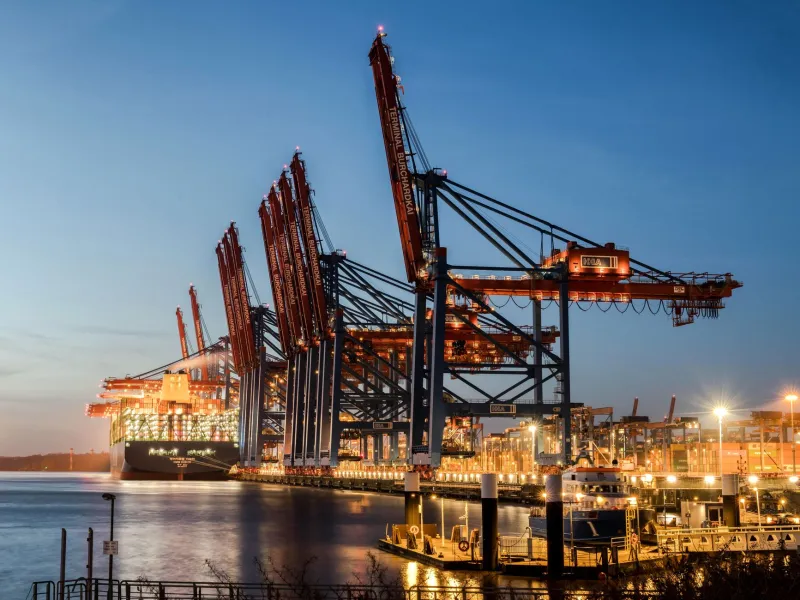
Let's start with what's actually happening here, because it's genuinely staggering. The Suez Canal generates billions of dollars in annual revenue for the Egyptian government — over $9 billion in fiscal year 2023 alone, a record at the time. Port Said, sitting at the northern mouth of the canal, is the operational heart of that machine. The port complex processes enormous volumes of container traffic. The city's free trade zone, established back in the 1970s, was one of the first of its kind in the Arab world and still draws significant manufacturing and warehousing activity.
Yet the median income in Port Said remains a fraction of what you'd find in a comparable hub city in, say, Southeast Asia or Southern Europe. Infrastructure outside the port zone can feel decades behind. Tourism, despite some genuinely compelling history and a waterfront that should be a goldmine, remains modest by regional standards.
So what's going on?
A History That Explains a Lot
Port Said was built from scratch in 1859, essentially conjured out of a sandbar to serve the construction of the Suez Canal. It was never meant to be a city in the conventional sense — it was infrastructure with a postal address. That origin story has shaped everything that followed.
During the colonial era, the economic benefits of the canal flowed almost entirely to foreign shareholders — primarily French and British interests — rather than to Egypt or to the people living in Port Said. The city was a functional node, not a beneficiary. When Egypt nationalized the canal under Nasser in 1956, the political drama that followed — including the Suez Crisis, the 1967 war, and the 1973 conflict — left Port Said physically damaged and economically disrupted multiple times within a single generation.
The city was evacuated entirely between 1967 and 1973. Residents came back to a place that had been frozen in time and partially destroyed. That kind of interruption doesn't just set a city back economically — it breaks the generational continuity that allows wealth and civic infrastructure to compound over time.
The Free Zone Paradox
Here's where it gets really interesting for anyone trying to understand Port Said's economic identity. The free trade zone, which covers a significant chunk of the city's economic activity, is specifically designed to move goods through rather than generate lasting local wealth. Businesses operating in the zone pay reduced taxes. Goods come in, get processed or repackaged, and go back out. The employment it generates is real, but the wealth doesn't circulate through the local economy the way it would in a city built around, say, tourism or domestic manufacturing.
Compare that to Dubai, which also built itself around a strategic geographic location and free zone economics. The difference is that Dubai made a deliberate, sustained, government-backed push to layer hospitality, finance, and real estate on top of its logistics base. Port Said never got that second chapter. Whether that's a policy failure, a resource constraint, or simply a different set of national priorities is a genuinely complicated question — but the result is a city that generates enormous throughput value without capturing much of it locally.
What Tourists and Expats Actually Find Here
If you arrive in Port Said expecting the polish of a global hub, you'll be surprised — not always pleasantly. The infrastructure is uneven. English signage is sparse outside the port and hotel areas. The kind of expat ecosystem that makes a city immediately legible to outsiders — international grocery stores, co-working spaces, a robust short-term rental market — is thin.
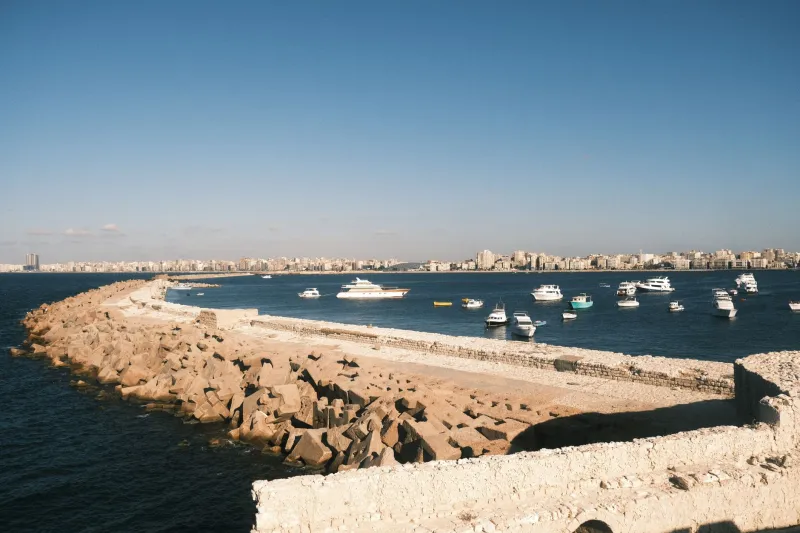
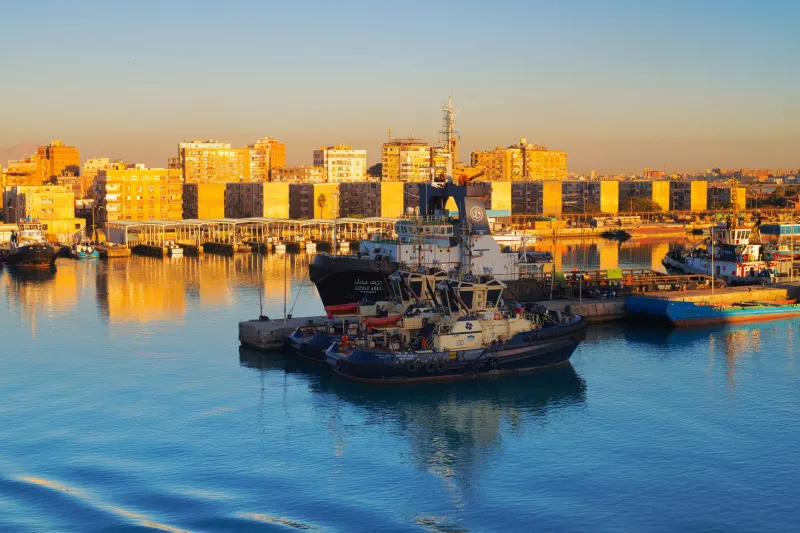
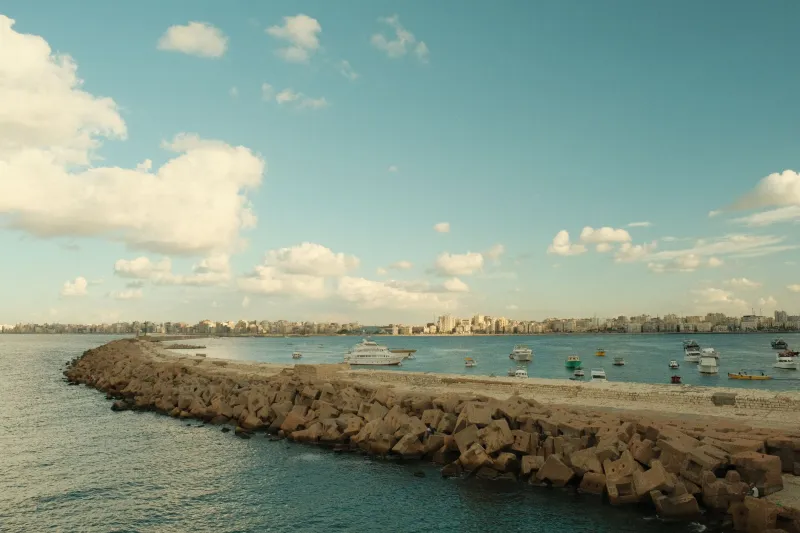
But here's the flip side of all that, and it's worth sitting with: Port Said is real in a way that heavily touristed cities often aren't. The waterfront is genuinely beautiful, especially in the late afternoon when the light hits the canal and you can watch massive container ships drift past at what feels like arm's length. The food scene is outstanding and almost entirely untouched by the kind of menu inflation that follows tourist dollars. The people are warm toward visitors in a way that feels earned rather than performed.
For expats specifically, the cost of living is low enough to be almost disorienting if you're coming from a major American city. You can rent a decent apartment near the water for less than most people spend on utilities back home. That's a real, tangible benefit that flows directly from the city's under-the-radar status.
The Visibility Question
There's a broader point here about how we decide which cities matter. Port Said doesn't have a major international airport. It doesn't have a Formula 1 race or a film festival or a tech conference that draws global media attention. It doesn't have the kind of soft-power infrastructure that gets a city onto "best places to visit" lists in travel magazines.
What it has is function. It has a role in the global economy that is, in some ways, more fundamental than almost any city you could name. The invisibility isn't an accident — it's partly the result of how Port Said was built, partly the result of Egypt's political history, and partly just the way the world's attention economy works. Cities that do unglamorous, essential work quietly tend not to get the recognition that cities selling glamour receive.
Why That Matters If You're Thinking About Coming Here
Understanding the paradox helps you calibrate your expectations in a useful way. You're not coming to Port Said for the five-star resort experience or the curated tourist trail. You're coming — or moving here — because you want something different. You want proximity to one of the most consequential places on earth without paying the premium that proximity usually demands. You want a city that's still figuring itself out, which means it's still genuinely interesting in ways that finished, polished places rarely are.
Port Said is sitting on something. Whether the investment and policy attention it would take to unlock that something will ever materialize is an open question. But for visitors and expats willing to engage with the city on its own terms, that unresolved tension is a feature, not a bug. There's a version of Port Said that could, someday, be one of the most remarkable cities in the Mediterranean world. Right now, you can visit the city that's still becoming it.