The People Behind Every Ship: Life on Port Said's Working Waterfront
Stand at the edge of Port Said's harbor at dawn and you'll witness something that no travel brochure quite prepares you for. Massive container ships — some longer than the Empire State Building is tall — glide past with an almost eerie silence, guided by men in small pilot boats who treat the whole operation like parallel parking a city block. It's breathtaking, and it happens hundreds of times a week.
Most Americans interact with the Suez Canal the same way they interact with their Wi-Fi router: they don't think about it until something goes wrong. But behind every flat-screen TV, every pair of sneakers, and every bottle of olive oil that arrives at a U.S. port is a chain of human effort that runs straight through Port Said. We sat down with some of the people who make it happen.
"You Never Stop Learning the Water"
Captain Mahmoud has been piloting vessels through the canal for over two decades. He meets us at a small café near the harbor entrance, still wearing part of his work uniform. His hands are weathered, and he speaks in the measured cadence of someone who has learned to stay calm for a living.
"Every ship is different," he says, wrapping both hands around a glass of tea. "Same water, same channel, but a tanker loaded with crude oil behaves completely differently from an empty container ship. The wind changes. The current shifts. You read all of it at once."
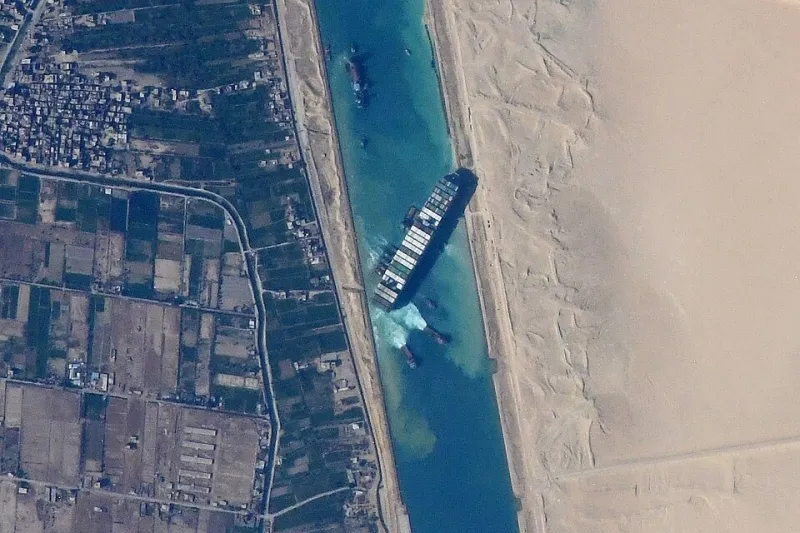
Canal pilots like Mahmoud board incoming vessels from small launches and take temporary command for the transit — a responsibility that carries enormous weight. A single error in judgment can block one of the world's most critical trade arteries. Americans got a vivid reminder of that in March 2021, when the Ever Given ran aground and halted global shipping for six days.
"After that incident, everyone suddenly wanted to know about us," Mahmoud says with a dry laugh. "Before that, nobody cared."
He's not wrong. But the people doing this job every single day would rather stay invisible. For them, a smooth transit is the whole point.
The Tugboat Crews: The Unsung Muscle
If canal pilots are the navigators, tugboat crews are the brute force — though calling them that undersells the precision involved. Ahmed, a tugboat engineer in his mid-thirties, grew up watching the ships from the Port Said corniche as a kid. Now he helps maneuver them.
"People see a tugboat and think it's simple — just push and pull," he says. "But you're working with physics that can crush steel. You have to anticipate what a 200,000-ton vessel is going to do before it does it."
Tugboats are deployed at the canal's entry and exit points, nudging massive ships into position with millimeter-level accuracy. The crews work rotating shifts, day and night, in all weather. During busy convoy periods — the canal runs organized convoys to manage two-way traffic — the pace is relentless.
Ahmed pulls out his phone and shows a video he took on a night shift: a brilliantly lit LNG tanker sliding past in the dark, close enough that you could almost reach out and touch it. "My daughter loves this video," he says. "She wants to work on ships someday."
Dock Life: The Rhythm of the Port
The waterfront around Port Said's commercial terminal operates on its own internal clock, one that has little to do with sunrise or sunset. Dockworkers here unload, inspect, and redirect cargo around the clock. Youssef, who has worked the docks for fifteen years, describes a job that is physically demanding but also, in its own way, deeply connected to the wider world.
"I have moved electronics, medicine, food, cars, military equipment — you name it," he says. "Once I helped unload a shipment of Halloween decorations. I had no idea what half of it was. Someone explained the holiday to me later."
That kind of cross-cultural curiosity runs through a lot of these conversations. Port Said has always been a place where the world passes through, and the people who work its waterfront have developed a particular awareness of global trade that most people never need to think about.
"When there's a shortage somewhere — like when there were problems getting things in America during COVID — we felt it here first," Youssef explains. "The orders changed. The cargo changed. We saw the disruption before most people heard about it on the news."
What the View From the Water Teaches You
Spend enough time talking to Port Said's waterfront workers and a few themes emerge. First, there's a quiet pride in doing work that is invisible precisely because it's done well. Second, there's a genuine sense of connection to a global system — these aren't people who feel isolated from the world. Quite the opposite.
Captain Mahmoud puts it simply: "Every flag I've seen, every country those ships come from — I've helped guide them through. That means something to me."
For American visitors who make it to Port Said, the harbor offers more than just a photo opportunity. It's a chance to see the actual machinery of global trade up close — and to meet the people who keep it running. The next time a package arrives at your door, there's a decent chance it passed through these waters, guided by hands like Mahmoud's.
That's not a small thing. It's just easy to forget.
How to Experience the Waterfront Yourself
If you want to get a feel for the working harbor without getting in anyone's way, the Port Said corniche offers excellent views of incoming and outgoing convoys, especially in the early morning hours. Local tour operators occasionally offer harbor boat trips that get you closer to the action — ask at your hotel or check with the Port Said tourist information office for current options. Respectful conversation with locals near the waterfront can open doors that no guidebook will list for you. Just bring patience, a willingness to listen, and — always a good call in Egypt — an offer to share tea.